
@space and science
Japan's Forgotten Paradise: The Natural Wonders of Iriomote | 4K UHD Documentary

Japan's Forgotten Paradise: The Natural Wonders of Iriomote | 4K UHD Documentary
Explore Iriomote, Japan's southernmost island, a UNESCO World Heritage site covered in ancient rainforests and vast mangrove forests, home to unique wildlife and traditional textile artistry.
5 places
 1Iriomote IslandIsland · Taketomi4.6Iriomote-jima, Taketomi, Yaeyama District, Okinawa, JapanCreator's voice
- Herons — Herons find plenty of food, especially tadpoles, in the rice paddies of Iriomote, which are cultivated without pesticides.
- Dragonflies — Dragonflies hunt smaller insects in the pesticide-free rice paddies, but can also become prey themselves.
- Crested serpent eagle — These raptors circle the dense rainforest looking for prey, often hunting on the ground. They are vigilant parents, protecting their eaglets from dangers like crows and typhoons. They perch on high spots like Akiko's roof for ideal hunting grounds over open village and field areas.
- Ryukyu flying foxes — Found only on Iriomote and its neighboring islands, these bats clamber from bloom to bloom, licking nectar from flowers like the Indian Coral Tree. They play a crucial role in spreading pollen and use the trees as dating sites.
- Iriomote cat — One of the world's rarest creatures, with probably only about 100 left. Very little is known about these wild cats due to their secret lives.
- Sagarana (Powderpuff tree) blossoms — This special tree blossoms at the end of the rainy season, opening its delicate, filigree flowers only after dark and for a single night. Locals compare them to summer night fireworks or miniature fiber optic lamps. By sunrise, their beauty has faded.
- Golden silk orb weaver spider — Japan's largest spider, this 5 cm female removes fallen sagarana blossoms from her web every morning to prevent it from being too visible to potential prey.
- Blue land crabs — These crabs mate in the rainy season and carry up to 700,000 eggs under their bellies. They wait for the perfect moment during high spring tides to set out and spawn, releasing larvae that quickly turn into tiny crabs.
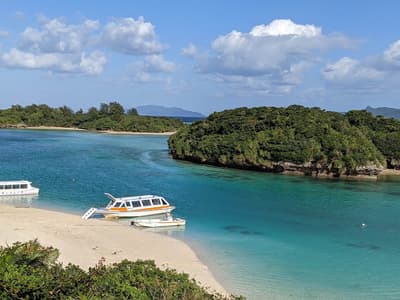 2Iriomote National ParkNational park · Taketomi4.5 (4,137)ClosedIriomote Ishigaki National Park, Komi, Taketomi, Yaeyama District, Okinawa 907-1432, Japan
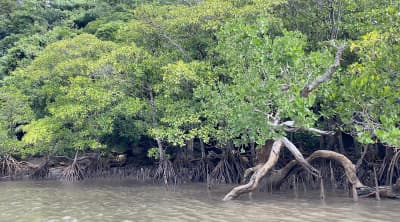
- 3Mangrove Forests of IriomoteNational park · Taketomi4.5 (4,137)ClosedIriomote Ishigaki National Park, Komi, Taketomi, Yaeyama District, Okinawa 907-1432, Japan
- Soldier crabs — Millions of soldier crabs sift the mud for food when the tide is out, making the ground 'positively hum'. They are a vital part of the mangrove ecosystem.
- Mud skippers — These amphibious fish are often seen in the mangrove mudflats, hunting for food and clashing over prey. Males build distinctive volcano-like burrows for breeding.
- Giant mangrove welks — These snails launch themselves in hundreds on mineral-rich mangrove leaves that have been jettisoned by the trees. They are recycling specialists, with their excretions feeding other species.
- Hermit crabs — Classic house squatters, these crabs use empty shells for protection. They are vulnerable and constantly searching for new, larger shells as they grow.
- Ruddy kingfisher — These kingfishers come to Iriomote in April to breed, their song heralding the mildest time of year, known locally as 'Uron'. They have a unique trick of using stones as anvils to crack open shells, a skill passed down through generations. They nest in termite mounds.
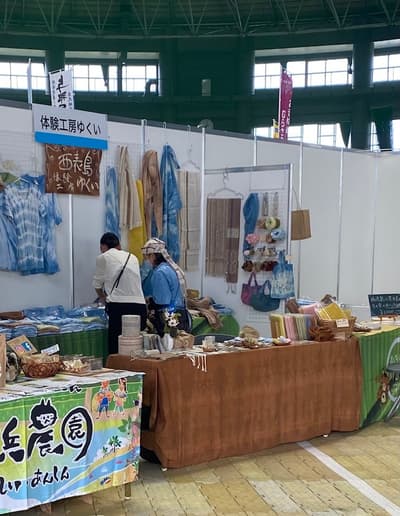 4Akiko Ishigaki's Textile StudioHandicraft · Taketomi4.3 (8)Open · until 5 PMJapan, 〒907-1432 Okinawa, Yaeyama District, Taketomi, Komi, 11−1 西表島の染め織り屋さん~体験工房 yukui
- Natural dye from mangrove bark — Akiko extracts a deep red dye from the bark of a local mangrove species. The process involves boiling the bark for several hours, with the exact timing depending on factors like the sun's position and plant condition, reflecting her work's deep connection to nature's rhythms.
- Yarn from silk moth cocoons — Akiko and her pupils create particularly valuable yarn from silk moth cocoons, using decades of experience to know the precise timing for harvesting and processing.
- Banana fiber yarn — Another of Akiko's students harvests wild bananas to extract fibers. The best fibers are found in the heart of the plant, requiring stripping off outer layers. The high humidity of the rainy season is crucial for keeping the banana fiber supple during weaving.
- Washing fabrics in the sea (Umari) — The final stage of Akiko's textile process is 'umari', washing the fabric panels in the sea. This step makes the colors glow and the fabric gleam, symbolizing the ocean ('umu') and giving birth. The mangroves provide the perfect combination of salt and fresh water for this process.
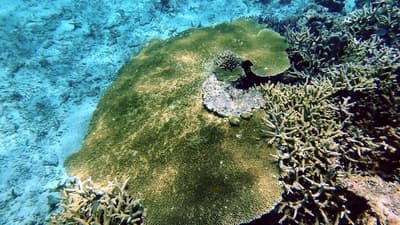 5Iriomote Coral ReefsTourist attraction · Taketomi4.7Ida beach, Iriomote, Taketomi, Yaeyama District, Okinawa 907-1542, Japan
- Cleaner wrasse — These fish are looking for work, clearing parasites from the skin and even the gills of other marine animals of all sizes, including majestic manta rays.
- Manta ray — Majestic manta rays are clients of the cleaner wrasse, allowing them to sweep their gills for parasites.
- Brown doctorfish — These fish engage in collective spawning during the full moon, with females shooting to the surface to release eggs and males fertilizing them as they drift back down.
- Eelgrass meadows — These meadows also spawn at spring high water, producing air bubbles that carry male blossoms up to the surface to fertilize female blossoms. Timing is crucial to avoid being carried out to sea or left dry.